Crime and punishment | Part -2
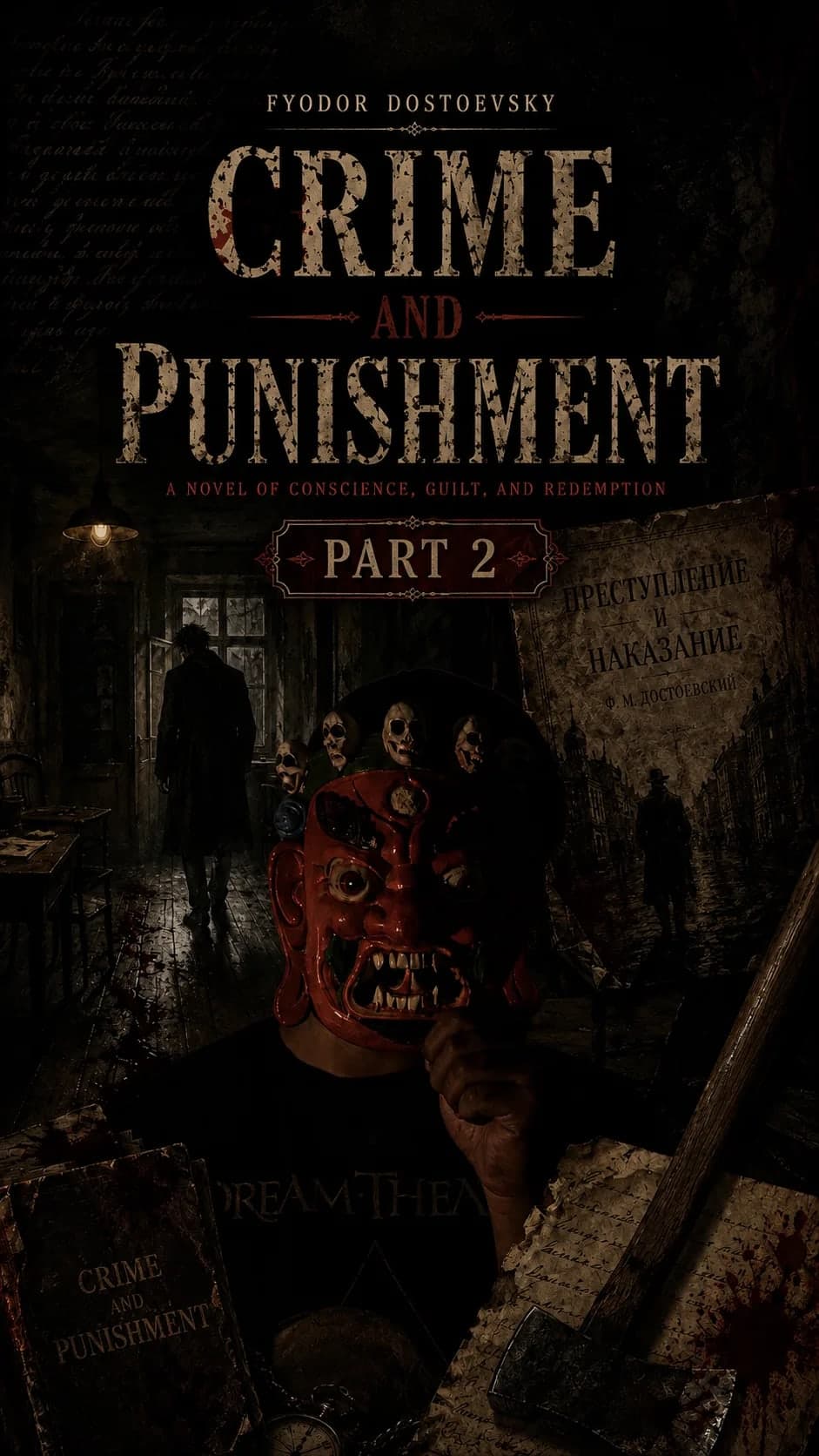
“No witness is so terrible and no accuser so powerful as conscience.” - Sophocles. What if the perfect crime sti। । । eaves behind a witness? Not the po। ice, not society, your own conscience. That is where Crime and Punishment truly begins. Rasko। nikov escapes the crime scene, he hides the evidence, he mis। eads suspicion. Yet he cannot escape himself. His punishment doesn't begin in court. It begins in silence, in sleep। ess nights, in fractured thoughts, in the unbearable weight of memory. Dostoevsky understood something extraordinary: a prison can lock the body, only guilt can imprison the mind. রাস্কলনিকভের বিরুদ্ধে সবচেয়ে বড় সাক্ষী কোনো মানুষ নয়, তার নিজের বিবেক। দস্তয়েভস্কি আমাদের শেখান, শাস্তি সবসময় রায় ঘোষণার পর শুরু হয় না, বরং অনেক সময় তা শুরু হয় অপরাধের পরবর্তী নীরব মুহূর্তে। মানুষ অপরাধ লুকাতে পারে, প্রমাণ লোপাট, আইনের ফাঁকি—সবই দিতে পারে। But can anyone erase memory? Can anyone silence conscience? তাই দুই শতাব্দী পরেও এই উপন্যাস পাঠককে অস্বস্তিতে ফেলে। কারণ বিচার শুধু আদালতেই হয় না, বিচার হয় মানুষের গহীন অন্তরেও। The deepest prison is invisible. It is built by the truths we cannot escape.